

-
-
-
-

GET STARTED

RESOURCES
-

INSPIRATION

LEARN
.webp)








Algolia Assist
How can I help you today?
I search through your content to help you find answers to your questions, fast.

Looking for our logo?
I search through your content to help you find answers to your questions, fast.
Looking for our logo?
Recherche sémantique vs. Recherche agent: quelle est la différence?
Get a customized demo from our search experts
Get a demoWith the rise of LLMs and generative search use cases, many brands conflate semantic search and agentic (LLM-driven) search. While both rely on AI and language understanding, they solve different problems and operate at different layers of the search experience. Algolia is at the forefront of this shift that is transforming discovery. The way we search is evolving, and our definitions – and understanding – need to grow with them.
Semantics is the study of meaning in language. Semantic search retrieves information by matching meanings rather than characters.
Using machine learning (ML) and Natural Language Processing (NLP), semantic search hones in on user intent, retrieving information and products that are conceptually related to or contextually implied by the user’s query.
Semantic search finds results using vector embeddings. A vector is an array of numbers representing the features of a specific datapoint in a form suited to the mathematical logic of ML, whether that datapoint is text, image, or otherwise. The numerical representation corresponds to the real world features of the datapoint, so the more similar datapoints are in reality, the more similar their positions on a vector will be. For instance, “evening gown” will be close to “formal dress” along a vector.
Semantic search delivers results as rapidly as traditional keyword search, focusing on the relationship between words by proximity of meaning rather than by matching specific characters. It is a fully deterministic method: the same query will always return the same results in the same ranking.
Where keywords look for exact matches to a query, semantic search looks for what a query means, however that meaning was conveyed. A third type of search, agentic search, looks for the purpose or aim of a query.
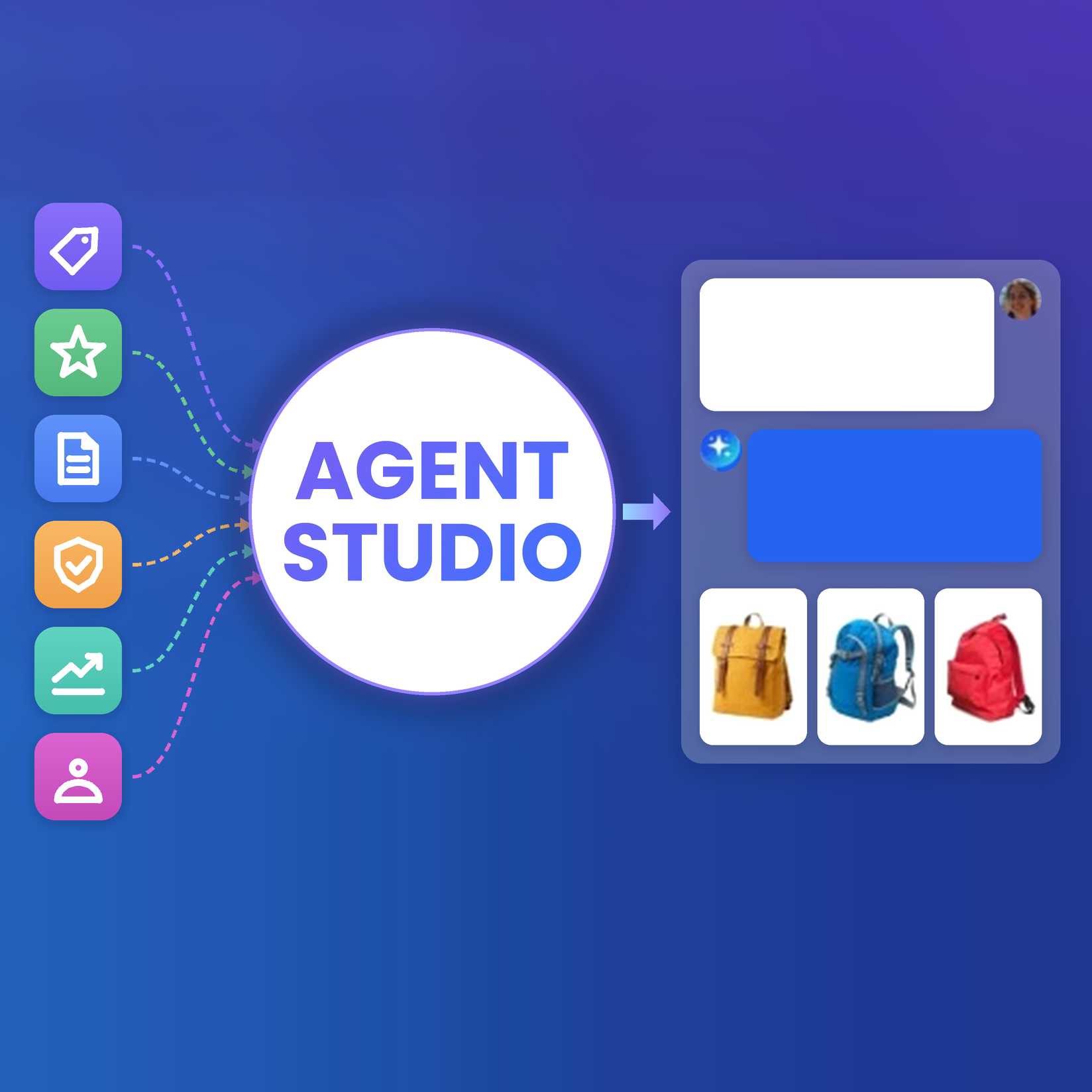
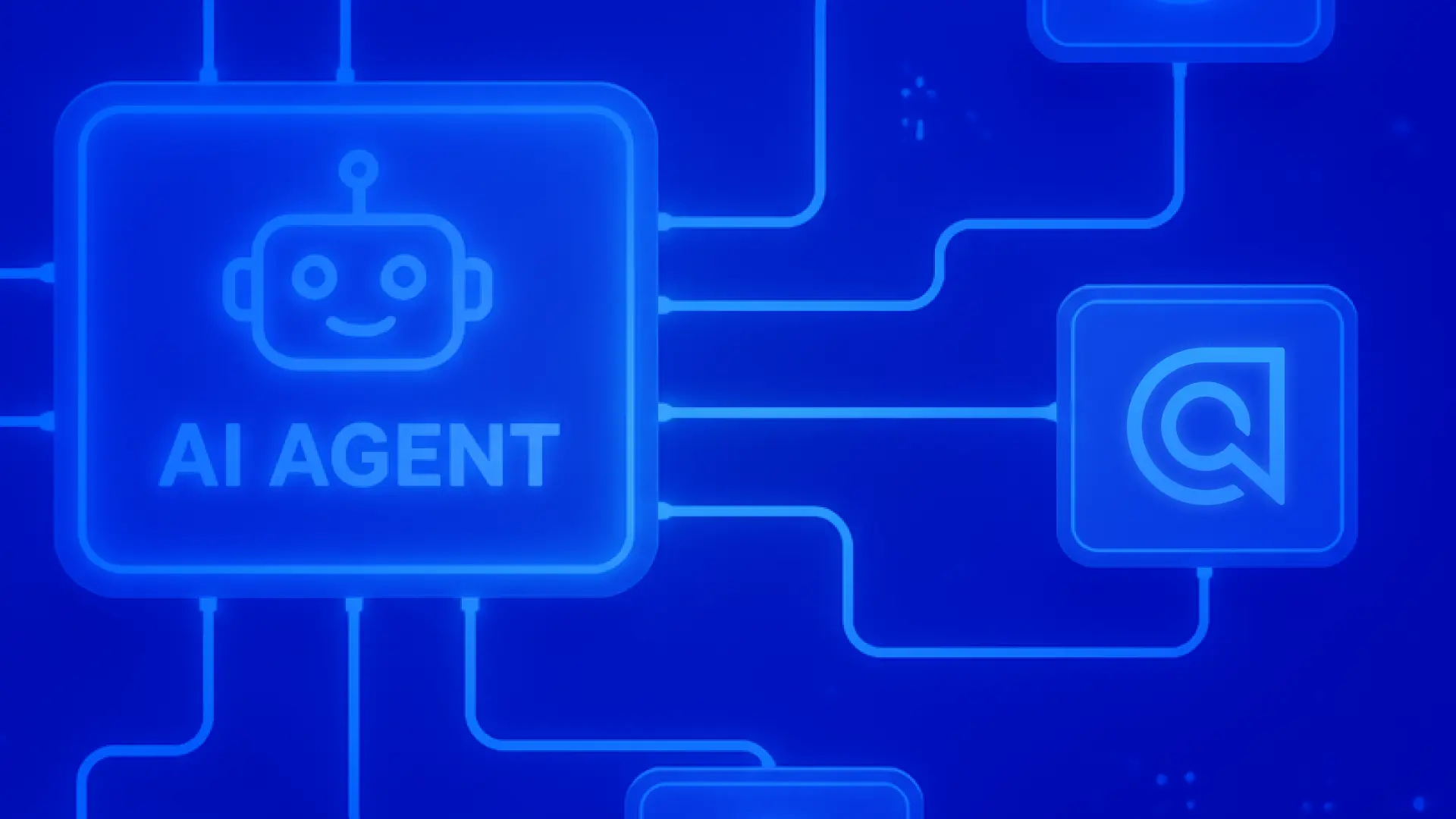
Agentic search uses an AI agent to deconstruct complex queries, interpret the user’s intent, then take actions to return appropriate results. This kind of search parses what’s most important in a query.
AI agents are often powered by a large language model (LLM), and can perform multi-part actions, like calling a search engine then applying filters or combining multiple data sources to refine the search.
Agentic search uses an LLM as a reasoning layer, either before or alongside search. The AI agent receives and interprets a user’s query, breaking larger tasks into simpler actions, and assigning tools to complete those actions. The capabilities of AI agents range widely in scope. On the simple end, agentic search can rewrite queries. More complex AI-driven orchestration coordinates the actions of multiple agents which rewrite queries, add structure, and break down tasks into performable parts.
For a query like “I’m looking for an outfit like Taylor Swift’s at the Grammys,” the AI agent first maps the query to “sparkly floor-length dress” then calls semantic search with the refined query. For a more complex query like, “Show me shoes and a matching handbag for a wedding,” the AI agent detects two related needs, performs separate searches, then combines the results.
Where semantic search is deterministic, agentic search can perform multiple rounds of retrieval, refining results until they meet the desired quality threshold, exchanging more time and computing cost for more relevant results. It performs best when it is paired with a vector-based backend: the better matches provided by vector embeddings give the agent higher-quality material to reason with.
Semantic search and agentic search are two different processes, but they work together to make search functions both fast and accurate. It’s important to learn the distinctions, not to choose one or the other, but to understand how they interact and work together.
| Layer | Role | Analogy | Example Query | Output |
|---|---|---|---|---|
| Semantic Search | To find results that are conceptually related | Keyword search on steroids | “red leather handbag” | A product grid with red purses |
| Agentic Search | To interpret user intent, even if that requires deconstructing complex, multi-part queries | Rules-based search on steroids | “Gift ideas for a stylish friend who travels a lot” | The agent first reformulates the query to “travel accessories + designer items,” and then calls semantic search to deliver a product grid |
Both search methods rely on advanced automation and natural language understanding, but each solves a different problem set. Working together, semantic and agentic processes allow search to be more adaptive, helpful, and intelligent, natural, and adaptive.
Discover how Algolia’s search solutions can benefit your business.
Powered by Algolia AI Recommendations
%20(2).svg)