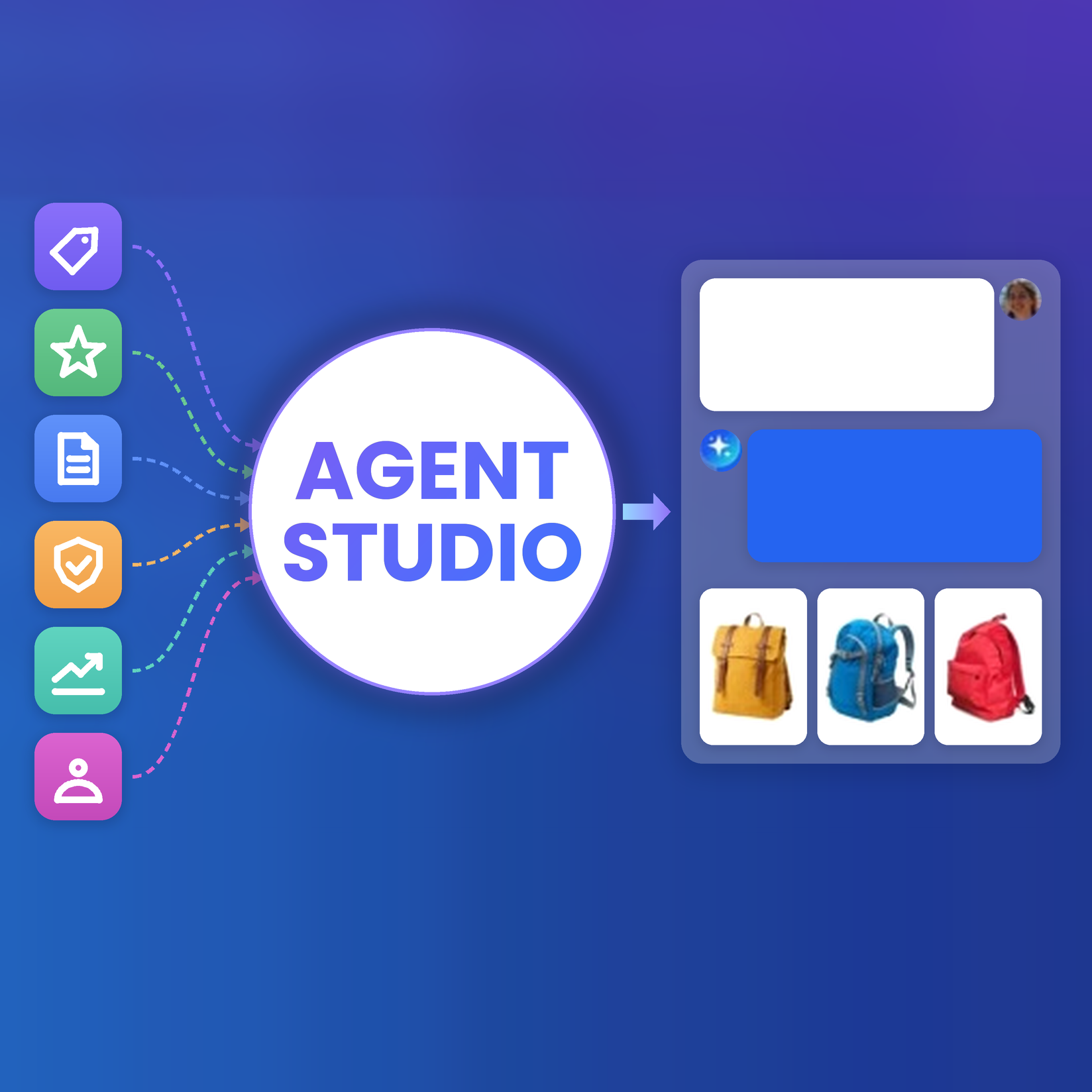
Among a diverse group of manufacturers and distributors offering useful online buying journeys to their customers, one thing stands out in common: A customer-facing digital interface displaying critical information pulled from back-end software, including enterprise resource planning, product information management software and applications managing product and customer data.
Heavy equipment manufacturers Caterpillar Inc. and Hyster-Yale Group and distributors IBT Industrial Solutions, Groupe Touchette and Fairmount Tire & Rubber are all relying on ecommerce technology integration to move ahead with sales-generating B2B ecommerce strategies.
“We worked to understand the different types of customers in an ecommerce portfolio that addresses their needs and makes customers more productive,” says Brent Steffen, vice president of ecommerce at Caterpillar and its Cat Digital business.
Like the other companies mentioned here, Caterpillar (see page 13) is relying on integration between its customer-facing ecommerce technology and back-end software. The setup pulls critical data and images effectively from its enterprise resource planning and other applications. It gives buyers what they need to find and purchase what their company needs.
The stakes are high for B2B sellers to provide a useful customer-facing interface with updated, accurate and easy-to-find views of products — and with a measure of personalization that lets buyers more quickly find all of what their procurement task requires.
“There’s plenty of opportunities for companies to get the basics of B2B ecommerce, but that means good integrations — improved product data, PIM technology, and making buying processes more efficient,” says Gene Alvarez, vice president and digital commerce analyst at technology research and advisory firm Gartner Inc.
“If you’re doing online B2B personalization,” he adds, “you need to accurately provide the exact product you’re recommending so that there’s no mis-buy. In the B2B world, if I buy the wrong thing, I have to send it back and wait for the right thing — and that might shut down one of my production lines.”
More B2B companies are getting that message and configuring their ecommerce and back-end technology with a focus on what their customers need.
“The way in which we can engage our customers is to provide one central place that makes it easy for them to shop for anything they may need,” says Kellie Casey, manager of aftermarket communications and ecommerce at forklift manufacturer Hyster-Yale Group.
Upgrading ERP for ecommerce sales
At IBT Industrial Solutions, the key to making its personalization strategy work will be integrating new personalization engines and tools into its ecommerce platform. As part of its personalization strategy, IBT is upgrading its ERP system to help improve data flow between the ERP software and IBT’s ecommerce platform.
IBT Industrial Solutions is upgrading its technology system to improve data flow between the ERP software and IBT’s ecommerce platform.
Carin Sampson, vice president of human resources and marketing, IBT Industrial
“Our legacy ERP predates APIs, and that’s where the complexity with integration comes in,” says Carin Sampson, who heads up IBT’s ecommerce strategy as vice president of human resources and marketing. She adds that the company’s ecommerce platform integrates easily with its product information management (PIM) system.
“For us, it’s about the tech stack, not one app,” she says.
Once IBT completely installs its new ERP system, Sampson says the company will be able to make relevant product recommendations for each customer, whatever their interests. In addition, IBT is looking to add predictive analytics to forecast what products customers are likely to buy, helping IBT to achieve the right balance in its catalog. The company has more than 2 million SKUs in its ERP system.
“Right now, we can get data on what a customer buys and how often, but we can’t predict what they are likely to buy,” Sampson says. “That is a capability we want to pull into the personalization mix.”
Rolling out better service to auto repair shops
In a trend affecting multiple industries, selling tires is becoming more challenging with the increasing number of private labels and tire sizes and greater demand from B2B and B2C buyers for an omnichannel buying experience.
So as a prominent tire supplier to Canada’s automobile manufacturers, dealers and independent tire retailers, Montreal-based distributor Groupe Touchette Inc. has relaunched its ecommerce platform to meet the demands of multiple B2B channels and individual consumers.
The company’s new ecommerce platform, running on SAP Commerce technology from SAP SE, hosts several transactional commerce sites, including TireLink.ca for sales to motor vehicle manufacturers and their dealers; DTTire.ca for independent tire dealers and installers; and Tireland.ca, where consumers can purchase tires and arrange for professional installation.
Groupe Touchette says 94% of customer orders are now placed through the ecommerce site, up from less than 80% on its prior site.
Operating online with more agility
“The tire distribution industry has seen significant shifts in recent years, including the emergence of private-label tires, and advanced use of data, analytics and technology logistics,” says Denis Gallagher, vice president of IT. “Since the establishment of the new omnichannel B2B platform, we have been able to respond to these demands with more agility.”
As a result, he adds, “we are seeing our customer loyalty, competitive advantage, and market share all increasing, coupled with a reduction in calls and costs to our call centers.”
“We are seeing our customer loyalty, competitive advantage, and market share all increasing.”
Denis Gallagher, vice president of IT, Groupe Touchette Inc.
Groupe Touchette also operates more than 50 distribution centers throughout Canada, putting it “in a position to offer delivery services in 90 of the 100 largest cities in the country in less than three hours,” Gallagher says.
The distributor’s overall sales and fulfillment operations, however, require reliable connections to exchange customer and product data between its ecommerce platform and back-end business operations software.
Integrating ecommerce with ERP
Groupe Touchette worked with Toronto-based systems integrator Pivotree to deploy SAP Commerce and integrate it with the distributor’s SAP S/4HANA enterprise resource planning software, providing for accurate online presentation of such content as:
- Customer contract pricing.
- Order details and status.
- Customer activity data.
- Promotions.
Among other improvements, the ecommerce platform also features enhanced site search and navigation, resulting in more repeat customers and fewer calls to customer service, Gallagher says.
Fairmount Tire & Rubber, a Los Angeles-based regional distributor, uses its integrated ERP, order management and delivery management systems to automatically coordinate how orders are delivered with the most efficient use of trucks and routes, says Scott Dushane, director of IT.
“It is an unbelievably difficult problem to route trucks throughout a city, like mathematically,” he says, adding, “Descartes comes up with sort of magical solutions that [we] never came up with for the last 30 years of running the same routes.”
As customer orders come into Fairmount’s B2B ecommerce login customer portal, at b2b.fairmounttire.com, the tire distributor’s financial software generates electronic invoices that the delivery management system allocates to delivery trucks based on their availability and capacity.
‘We totally eliminated paper’
One advantage of the new system is replacing a system that used to require three sheets of paper for each invoice. When drivers make deliveries, they use mobile devices stored with order details and e-invoices to receive customers’ digital signatures and generate delivery confirmation notes.
“We totally eliminated paper,” Dushane says.
In addition, Fairmount speeds up deliveries by using its software to arrange multiple orders on the same truck in a way that makes them faster to unload at each customer’s destination. And that has opened the door to more sales opportunities as well as greater efficiency, Dushane says.
“We have been able to start to run second and third routes because of Descartes … because we know when the drivers will be coming back and what the trucks can be filled up to — there’s no obfuscation,” he says. “We have fixed costs,” he adds. “So let’s use those fixed costs to the best of our ability.”
Fairmount’s delivery management system comes up with “sort of magical solutions.”
Scott Dushane, director of IT, Fairmount Tire & Rubber
With the right tools, B2B companies build better ecommerce strategies
Sponsored article. An executive conversation with Piyush Patel, chief strategic business development officer, Algolia.
In recent years, ecommerce has seen an unprecedented boost across all industry sectors. Now, as that unexpected growth starts to level off, many companies have time to reassess their ecommerce technologies and determine what capabilities they really need to maximize growth. Digital Commerce 360 B2B spoke with Piyush Patel, chief strategic business development officer at Algolia, about B2B companies’ current approaches to ecommerce and what success in the future might look like.
How would you describe B2B companies’ current approach to ecommerce?
B2B companies, already cautious to adopt ecommerce capabilities prior to 2020, didn’t experience the same growth boost during the pandemic as B2C companies. At best, most of them scrambled to get basic ecommerce technology in place just so they could continue to do business. Meanwhile, ecommerce technology moved forward quickly. During that time, companies and technology providers alike learned a lot of lessons and developed the capabilities needed to conduct business in a pandemic world. Now, as it all starts to level out, B2B companies are reassessing their ecommerce strategies and, in many cases, just trying to catch up to B2C counterparts with customer experiences that need improvement.
How do B2B companies’ ecommerce capabilities compare to B2C companies?
Historically, B2B companies believed their businesses were too complex for ecommerce. The straightforward B2C platforms that were available usually didn’t have the functionality that most B2B companies needed, such as offering different pricing and specific product catalogs to different customers. Those kinds of nuances made it difficult to find ecommerce technologies that worked for their complex businesses without big development investments. But B2B ecommerce technology has come a long way. Thanks to advancements in technology and lessons learned from early adopters of B2B ecommerce technology, digital transformation is well within reach for most B2B companies.
What set of digital capabilities help B2B companies engage their customers most?
Unlike B2C, B2B companies don’t have to worry about anonymization of transactions. Each B2B customer has a specific product catalog and pricing structure, which means they have a relationship/account to shop. Hence, B2B companies need technology that allows users to do things like have profiles (multiple buyers/approvers), see the products available to them at their negotiated pricing, track order history, reorder similar items on a schedule, etc. B2B ecommerce platforms need to have the capability to support all of these things. These tools generate a lot of data. And with this type of data, B2B companies can create highly personalized shopping experiences for their customers. Therefore, one area that will leapfrog B2C will be the ability to deliver highly personalized experiences due to lower fear of “privacy” and data that an organization will be willing to include in the relationship.
How can they be sure the technologies they have in place are the best for growing their business?
The first step is understanding their buyers and what they need. Every company is different, so they need to cater to their specific customers. From there, they can pick the capabilities that address those needs — making their customers’ shopping experience as easy as possible. They must also ensure the various pieces of technology they choose work well together. Partnering with a company like Algolia can help. We help tie everything together, making the buyer’s shopping journey as smooth as possible. We designed our platform to be easily extended to apply to different use cases. In addition, companies should pick the technology that will help them have the flexibility to address customers’ needs as things mature. They should also ensure their technology vendor has a proven track record of delivering value to B2B customers.
- Reveal the one SKU in a million
- Master the art of the reveal
- Build loyalty with your customers by delivering a stellar online B2B buying journey.
- Algolia Search and Discovery helps you surface the best search results to get the right product to the right customer at the right price — always.
Learn more at algolia.com.
Case study – Caterpillar: How Caterpillar pushes ahead with ecommerce
Caterpillar set a goal last year of increasing online parts sales through its dealers by 50% within three years. In a keynote presentation at the 2023 EnvisionB2B, Brent Steffen, director of ecommerce, said Caterpillar is making progress through technology integration, meticulous customer research, investments in personalization and a new mobile app.
Caterpillar Inc. surpassed $2 billion in digital part sales last year, and in May 2022 set a goal of increasing online sales through its dealers by another 50% within three years. Brent Steffen, director of ecommerce and digital marketing at the equipment manufacturer, provided an update on the progress of the campaign.
Speaking in a keynote fireside chat with Digital Commerce 360 editors Mark Brohan and Gretchen Salois at the 2023 EnvisionB2B Conference & Exhibition in Chicago, Steffen explained that the first step was understanding the different types of buyers of Caterpillar’s earthmoving and other equipment, and how best to serve them online.
With that understanding, Caterpillar designed its parts-sales ecommerce site, Parts.Cat.Com, so that each type of buyer sees the kind of information they need about the 1.5 million parts the site offers.
For retail buyers, the website provides a lot of information, imagery, specifications and two-dimensional designs. Professional buyers need the website to be tailored to each member of frequently extensive teams — from machine operators to technicians to procurement managers — and the website caters to each person’s needs. Buyers get direct access through their enterprise resource planning and procurement software to the 130 out of Caterpillar’s 156 worldwide dealers that participate in its ecommerce program.
“We worked to understand the different types of customers in an ecommerce portfolio that addresses their needs and makes customers more productive,” Steffen said.
“We worked to understand the different types of customers in an ecommerce portfolio that addresses their needs.”
Brent Steffen, director of ecommerce Cat Digital, Caterpillar Inc.
Caterpillar sets digital standards for its dealers
As Caterpillar worked through this process, Steffen said, it identified two important groups that were critical to its digital success: its dealers and the employees who sell parts over the counter at those dealers’ 2,800 physical locations around the world.
While dealers are all independent businesses who do things their own ways, Steffen said, Caterpillar wants every online customer worldwide to have a premium and personalized experience. To do that, Caterpillar set digital standards that it works with its dealers to achieve. That includes ensuring that every dealer ecommerce site shows real-time pricing and availability of parts. Retail customers must be offered a range of payment types, not just credit terms but also credit cards and local payment options. And, when orders are placed, the website must enable customers to see the status of their order. Customers also must be able to initiate a return online, he said.
As for the over-the-counter salespeople, many felt that ecommerce would cannibalize their sales and reduce their commissions, Steffen said. Caterpillar embarked on a change management campaign to convince dealers and their employees “that we’re not trying to channel shift customers from over the counter to digital,” he said. “We’re convincing them that when we give customers choice, when they can come in to buy or buy online, our customers are more happy.”
Caterpillar’s new mobile app
As part of the ecommerce acceleration initiative, Caterpillar this year introduced a new mobile app, Cat Central. A customer can use the app to scan the QR code on a Caterpillar machine and get information directly related to that piece of equipment, which the app identifies through the serial number embedded in the QR code. That provides the customer with direct access to parts that fit that machine.
While that makes it easier for customers to buy replacement parts, that’s not the app’s only function, Steffen said. He said the app also provides each day personalized informational content and tips related to each customer’s equipment. The idea, he said, is to encourage customers — especially smaller customers who only buy parts occasionally — to use the app every day.
“That retail segment, they’re harder to bring in,” Steffen said. “The premise of Cat Central is we give retail customers compelling, useful content, delivered every day about how to own and operate equipment and do maintenance and repair, and seamlessly buy repair parts when there is a need.”
He said if they use the app regularly, they’ll know it’s available when they’re ready to make a purchase. And because the app is as much informational as it is a sales tool, Steffen said, Caterpillar measures success not by conversion rate, but by how many customers use it.
Caterpillar sets digital goals in 14 areas
Steffen emphasized that a huge campaign such as Caterpillar’s ecommerce acceleration program must be broken down into its component parts. He said the manufacturer has identified 14 critical areas of work, such as site search, mobile and quality, and defined key performance indicators (KPIs) to measure success in each area.
The key to success has been commitment to the initiative from top management, he said. “Our entire company is focused on driving services growth,” Steffen said, “and using ecommerce to do so.”
Key takeaways:
- A first step identified three customers segments: small buyers, larger fleet operators, and enterprise customers who want direct integration through ERP and procurement systems.
- To ensure that all online buyers worldwide are satisfied, Caterpillar has set digital standards for its 130 dealers that participate in its ecommerce program.
- A new mobile app provides customers with daily tips on how to maintain and repair their equipment, and makes it easy to scan QR codes to get information that relates directly to the machines they own.
Conclusion: Why you need to integrate ecommerce tech
Integrating a B2B ecommerce platform with ERP, PIM and other back-end software has clear benefits — up-to-date data on the products B2B buyers need to do their job, among other things — but convincing B2B sellers to make such integration a budget priority inevitably runs into challenges in allocating limited resources.
But one critical trend that underscores the importance of effective digital technology integration is the demand for the kind of helpful B2B buying experience tech integration provides. And what B2B buyers want was shown in a March 2023 survey of 103 B2B buyers jointly by Digital Commerce 360 and Forrester Research Inc. As charts here from that survey’s results show, buyers want ease of finding products and helpful content as well as good prices among their top demands. They also want to track orders and get expedient deliveries.
How important are each of the following on-site elements when making an online business purchase?
| Price |
80% |
| Ease of finding product via search and navigation |
74% |
| Customer reviews |
70% |
| Richness of product information and imagery |
70% |
| Efficiency of checkout experience |
67% |
| The assortment |
65% |
| Specialized content that aides in decision-making |
64% |
| Personalized experiences based on past purchases and browse behavior |
61% |
| Efficient replenishment tools |
61% |
| Product recommendations |
58% |
| Product videos |
50% |
| Augmented reality/virtual reality in product display |
49% |
How important are each of the following perception, pricing and customer service elements when making an online business purchase?
| Order tracking tools |
79% |
| Brand perception and trust |
79% |
| Fast delivery |
74% |
| Lowest risk of damaged/counterfeit products |
73% |
| Quality of customer service |
70% |
| Prior relationship with the company |
61% |
| Configure price quote |
60% |
| Live chat |
57% |
| Multiple payment/financing options |
54% |
| Multilingual content |
47% |
The survey also found that buyers prefer purchasing on manufacturers’ ecommerce sites because they find them to have the most reliable and helpful product information. As the companies covered in this report show, however, those with technology configurations that tie their customer-facing ecommerce venues to their back-end software systems succeed in addressing these customer demands — whether the sellers are manufacturers or distributors.
To what extent do you agree with the following statements?
| A brand that manufactures a product has the best information about that product on its own website. |
85% |
| A distributor that sells a product has better information on its own website about that product than the brand that manufactures the product has on its website. |
72% |
| A marketplace that sells products from multiple sellers has the greatest information in a convenient format. |
71% |
| I prefer to buy a B2B product directly from the brand that manufactures the product vs. the distributor that sells it. |
71% |
| I would be willing to pay slightly more to buy a B2B product directly from the brand that manufactures the product vs. the distributor that sells it. |
68% |
| I prefer to buy a B2B product on a marketplace where multiple sellers are featured. |
63% |
| I prefer to buy a B2B product from the distributor vs. the brand that manufactures the product. |
62% |
About the editor
Paul Demery is editor of Digital Commerce 360 | B2B. Prior to DC360B2B, he was managing editor of Internet Retailer magazine. In earlier work, he was editor-in-chief/associate publisher of Electronic Commerce World magazine, which covered business-to-business applications of internet technology in multiple industries; he also covered various industries for other magazines and newspapers.
Digital Commerce 360 B2B
- Mark Brohan, Senior Vice President, B2B and Market Research, mark@digitalcommerce360.com, 312-362-9535
- Don Davis, Editor at Large, don@digitalcommerce360.com, 312-362-0014
- Paul Demery, Editor, B2B, paul@digitalcommerce360.com, 312-362-9534
- Abbas Haleem, Associate Editor, abbas@digitalcommerce360.com
Contributor
Peter Lucas
About Digital Commerce 360
Digital Commerce 360, formerly Internet Retailer, has been a global leader in retail and B2B ecommerce research and media for over two decades. Our organization provides daily news, trend analysis, and competitive data to a vast community of executives, retailers, financial firms, manufacturers and more. Our team of experienced journalists and researchers publish a multitude of products each year, including dozens of research reports, newsletters, charts and infographics, webinars, live events, and data on thousands of ecommerce companies through its Digital Commerce 360 Research brand. We also founded groundbreaking ecommerce products and events, including Internet Retailer magazine, the Top 500 Guide, the Internet Retailer Conference & Exhibition (IRCE) and, most recently, the EnvisionB2B Conference & Exhibition.
About Digital Commerce 360 B2B
Digital Commerce 360 B2B covers all aspects of how businesses sell to business, government, and other institutional clients via the web, providing intelligence to the executives, managers and professionals at manufacturers, retailers, wholesalers and distributors. We provide business intelligence and industry leading content through research, newsletters, and B2B ecommerce reports focused on trends, marketplaces, technologies, and industry best practices. Plus, the team behind our EnvisionB2B Conference & Exhibition.
Copyright
Copyright 2023, Vertical Web Media LLC. All rights reserved. All Content of Boosting Sales with Tech Integration, whether in print or digital formats, and all content of the Top500Guide.com database version of this publication (collectively, the “Content”, “Report”), is owned by Vertical Web Media and protected by U.S. Copyright and by applicable intellectual property laws worldwide. The Content is intended solely for the personal use of Purchasers or Authorized Recipients of said Content, which use is limited to viewing, analyzing and creating reports for internal noncommercial use only. Purchasers and Authorized Recipients of the Content may share such usage with others within his/her company, but may not copy, download, reproduce, republish, sell, make available, distribute, display, transmit, share, or otherwise distribute any part of the Content to any other persons or entities without the written permission of Vertical Web Media. Purchasers and Authorized Recipients of the Content, in any and all of its formats, may not modify, create derivative works of, reverse compile, disassemble or reverse engineer, republish, sell, license, lease, sublicense, assign, incorporate into published material or any information retrieval system, or otherwise transfer any of the Content without written permission of Vertical Web Media.
The trademarks and service marks “Vertical Web Media”, “Digital Commerce 360”, and “Top 500 Guide®”, and any logos, designs, slogans or other source-identifying devices, including combinations thereof (excluding any third party owned trademarks or service marks) (“VWM Trademarks”) displayed on print, digital and Top500Guide.com database research products are owned by Vertical Web Media. The Digital Commerce 360, Report print, digital and database research product is designed to provide accurate and authoritative information in regard to the subject matter covered. This research product is sold with the understanding that the publisher is not engaged in rendering financial, legal, accounting, tax or other professional service. Vertical Web Media makes no warranty as to the reliability, accuracy, timeliness, usefulness, adequacy, completeness or suitability of the Digital Commerce 360, Report.
© Copyright 2023 Digital Commerce 360 & Vertical Web Media LLC. All rights reserved. Content published July 2023.